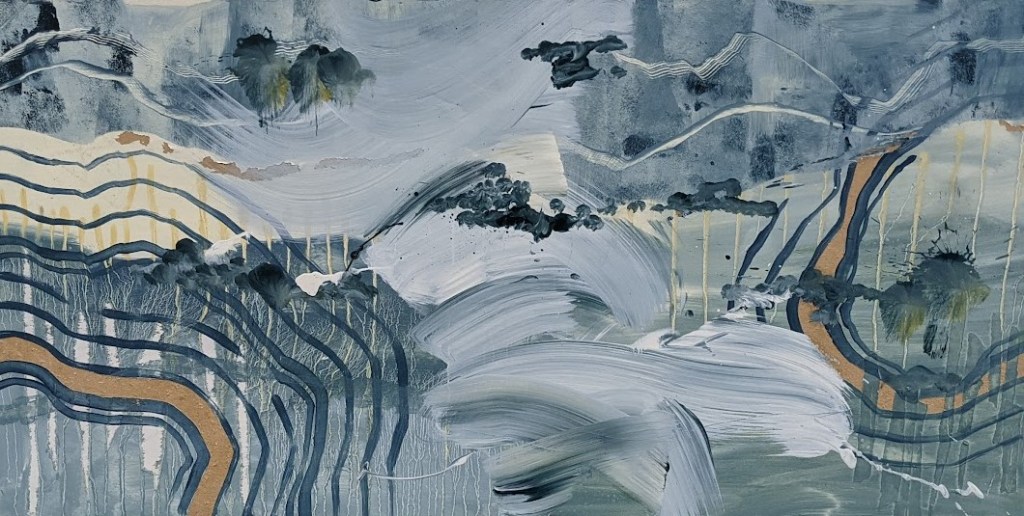
oil on hardboard panel, 60cm x 120cm
‘In Conversation #1’ is one half of a dynamic painting duo – a pair of paint sketches created in response to watching documentary ‘Six Days in September’ with legendary abstract expressionist painter John Hoyland. [Read more about the documentary in blog ‘Abstract Painting 101.’]
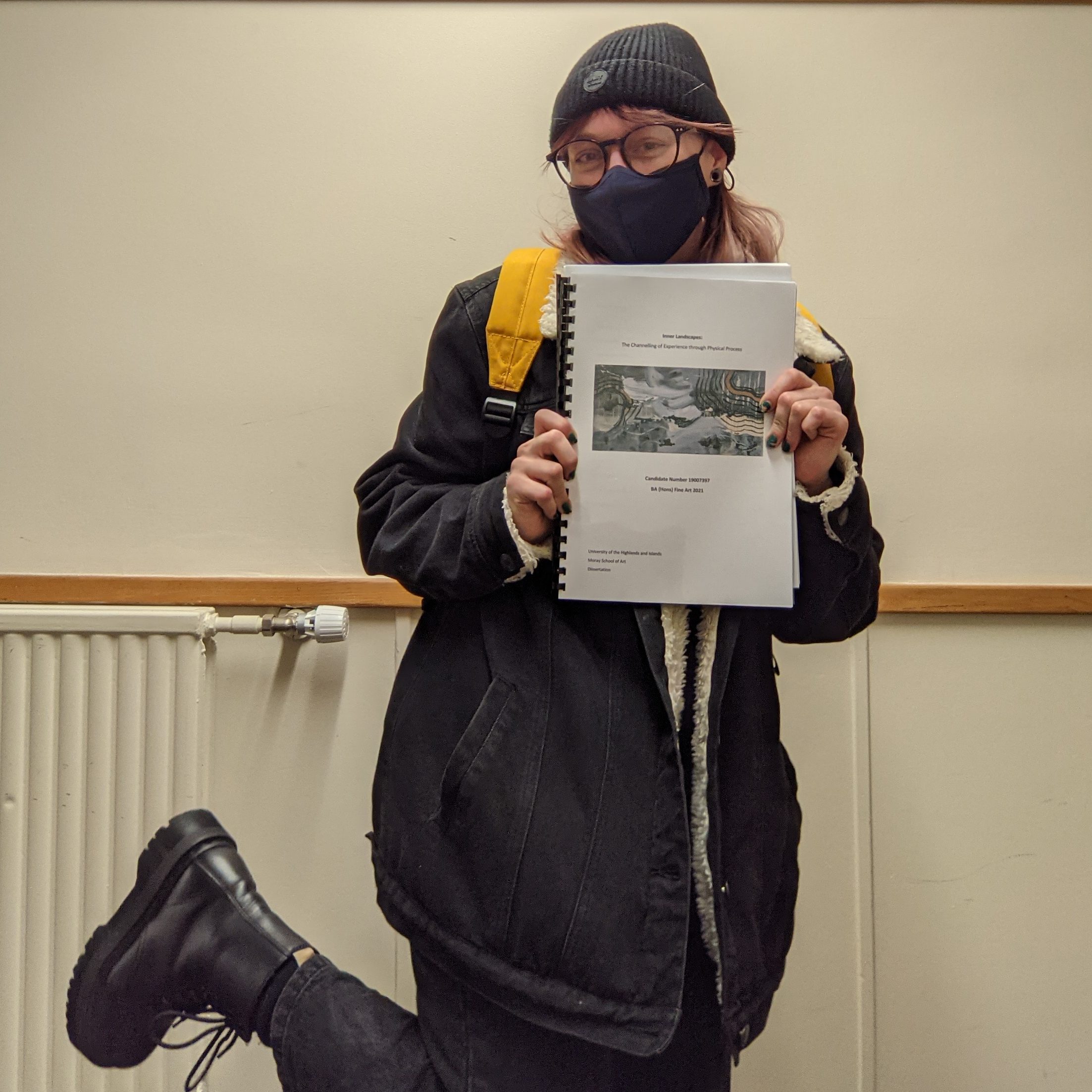
This duo are considered my first ‘proper’ paintings – they’re my first delve into oil paint, and In Conversation #2 was the first painting I ever sold ❤ Needless to say, these two paintings have a special place in my heart. #1 even featured as the cover image for my dissertation, see evidence:
Being my first foray into oils (outside of a couple of experiments), these paintings are super experimental and playful – I had played with almost every other medium but oils but had always been intimidated by their ‘official-ness.’ After watching documentary ‘Six Days in September’ with John Hoyland, I felt inspired to JFDI (Just Fuckin’ Do It) and grabbed some paints from the local office supplies shop. (Shout out Moray Office Supplies and their student discount!!! Love u xxx)
The process
I decided to throw a bit of everything in this series – masking, fluid gestures, thick strokes, creating markmaking tools… whatever intrusive thought entered my head, I gave it a go. I can’t understate the joy that allowing yourself to ignore traditional painting rules and simply play brings to the creative process.
Layer 1: playing with viscosity

I also created a super handy wall easel system using wooden beading (J-shaped pieces of wood trim) from B&Q that I could slide hardboard panels in and out, so that I could work on multiple paintings at a time. I still use a similar system to this day!
Layer 2: creating markmaking tools
Inspired by artist Rebecca Stern (thanks to the Instagram algorithm for putting her on my radar!), I decided to have a stab at making my own paintbrush for markmaking. I used a handful of brushes and a scrap hunk of skirting board a to create a temporary frankenbrush. It’s very DIY , but it worked an absolute treat!!


Using alternative brushes like this puts a nice bit of chance into the process – removing control over the final visuals of the painting was the goal, and creates so many interesting moments that would never happen if I had done those marks one-at-a-time with a single brush. (also saved a buttload of time!)
Layer 3: a happy accident
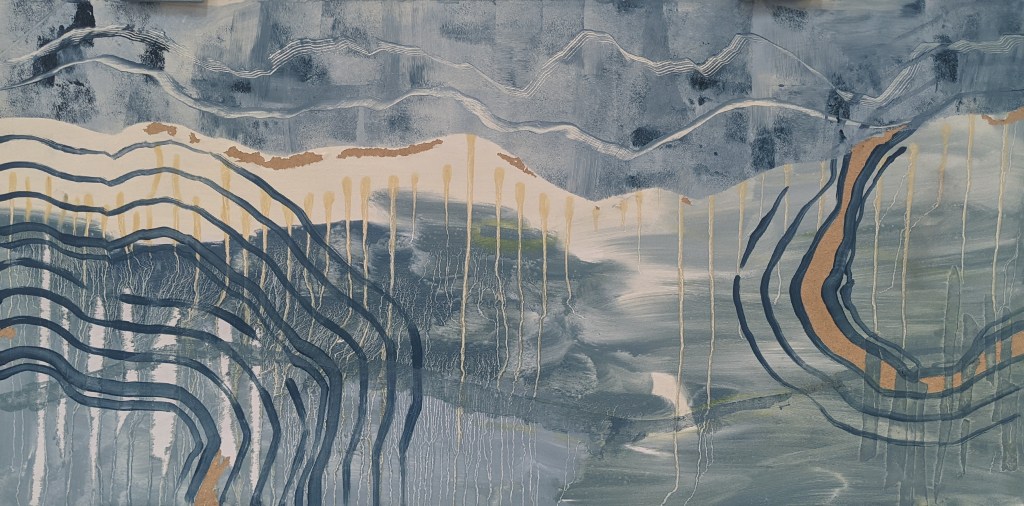
After masking off the top half of the painting to paint it, I had a happy accident – because I had accidentally used the wrong primer, the oil paint tore up with the tape… which ended up creating such an interesting window to the brown hardboard underneath that it sparked an idea… what if I just… tear back parts of the painting?

Layer 4: gestures
I decided that my painting was looking too controlled and slow-paced, so I wanted to add some fast gesture. I thinned out some paint and dripped it onto the canvas and swept a brush through it (in hindsight I should have recorded this process but I imagine that being a stressed student with deadlines may be the reason I forgot).
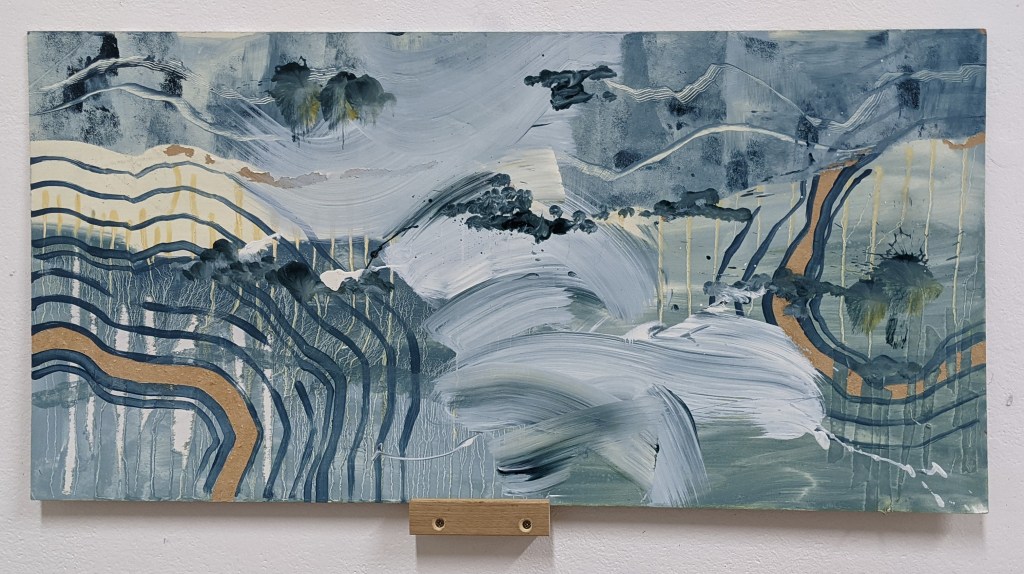
…and that’s how In Conversation #1 come about! These paintings helped me to discover a love of stretching the medium of oil paint to do the unexpected, and they’ll always have a special place in my heart for that.
Read more about the theory underpinning these paintings over at ‘In Conversation #2’

 kayldoesart // Kayleigh Kellas, abstract painter
Let me know your thoughts!